

The marginal return of the scientific research and scientific papers have diminished sharply over the past 100 years. This raises questions about the quality of scientific works and the method of its funding. Nowadays, most research is funded through governments, in the United States as well as other countries. However the taxpayers’ money is apparently not well spent. This method of government spending on research is however a new method, which became widespread just after the second world war. The Royal Society in Britain is the oldest scientific academy in the world which was founded in 1660 and it has been funded through a small group of elite fellows for hundreds of years.
The button line is the method in which scientific works are being funded is not efficient. In the United States, the National Institute of Health (NIH) hands over half of its fundings through fixed-term grants. Around 70 percent of the National Science Foundation (NSF) is distributed in the same way. In order to get the grant researcher should submit an at least 15 page proposal which proves the work worthiness. Over 80 percent of NIH and 90 percent of NSF fundings are distributed through these peer reviews.
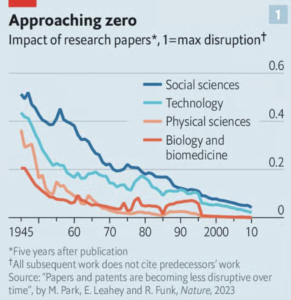
Maybe this method is not working very well. For example last year the scientist Katalin Kariko won a Nobel prize for her discoveries that led to rNA vaccines. However, she was not very successful bringing money to the Pennsylvania university and had been demoted from there because of that. More scientists are working on proposals to attract fundings and less have been successful in collecting funds.
There are various arguments, how to fix this problem. One argument is that funding science through tax payers money has not been a successful manner. We must turn back to a world in which most scientific studies and research and development has been done through corporations’ laboratories and not the universities.
The other argument is that the fundations should verify the minimum quality of proposals and then hand out cash randomly between qualified proposals. This method which is gaining more popularity they claim is even more efficient than current peer reviews. This method saves a lot of time and energy for both the scientist and science foundations.
Source: Economist