

The first gold ETFs started operating in 2004, and since then they deepened the market for gold. Gold ETFs have turned the gold from metal used mostly in jewelry to an important financial asset which is a hedge to inflation. Despite this, it has been three years that the gold holdings at ETFs are shrinking. The market is turning the gold ETF shares to physical gold and putting it in other parts of the gold market, whether it is jewelry, industry or just minting gold coins and bars which is an old fashioned form of gold investment. Does this mean that the gold ETFs are going out of the market? Not at all.
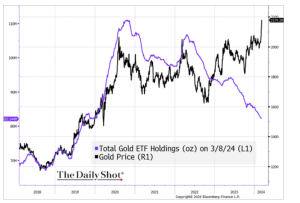
Financial instruments are innovative and brilliant, they help the market to maintain liquidity. As Miiton Friedman has famously said, financial markets, if managed properly, do not contribute to the shocks, they dampen the shocks. In the case of gold ETFs, they perform as a form of shock damper. When the demand for physical gold is declining, gold ETFs buy it and store it in vaults. Then they issue new ETF units in the financial markets for a small management fee. On the other hand when the demand for physical gold is rising, the large and authorized players collect ETF units from the market, turn it back to issuers and take the physical gold. Through the process the buyer is able to acquire gold at a better price compared to the market prices.
In the last three years, 543 tonnes of physical gold at ETFs have poured into the market from ETF vaults. This is around 3.6 % of the global annual gold supply. This amount helped to keep the market liquid and cooled the prices by supplying extra amounts of gold into the market.